
Skip to content

People

Developing leaders and teams

The front led by Li Tomazoni: developing the people who lead, building the team, and agreeing how the team works.

Almost every problem that arrives labelled "lack of process" turns out, up close, to be a conversation nobody had. The person leading was never taught to lead, the team grew without agreeing how it works, and the company came to depend on one person remembering everything.
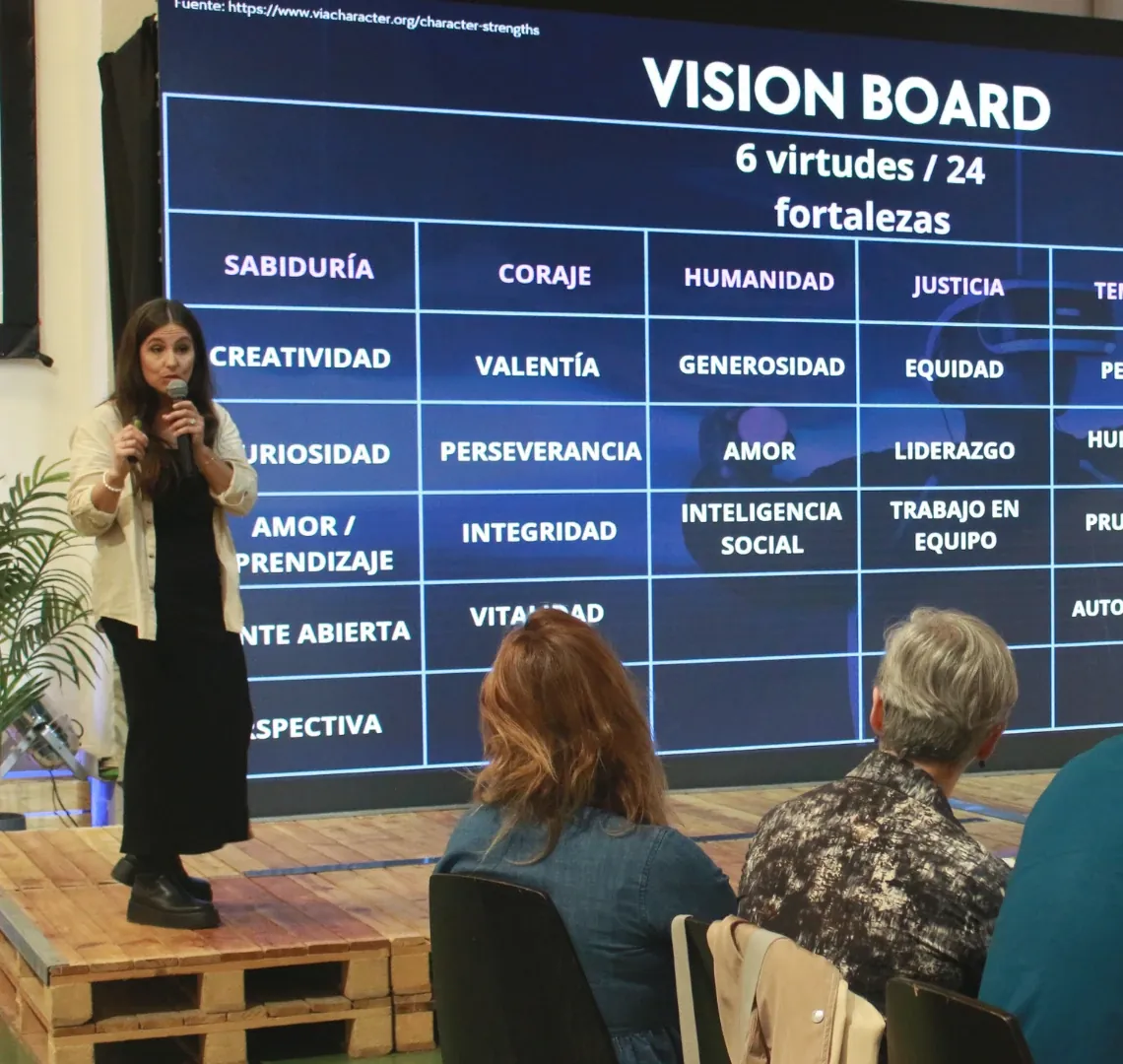
A presenter speaks into a microphone on a stage, in front of a screen showing the six virtues and 24 character strengths; the audience follows, seated and taking notes.

The problem

What jams a small team

The leader became one without learning how

Promoted for being good at the work. Nobody taught them to delegate, to give hard feedback or to hold the conversation that needs to happen — so they go back to doing it themselves, because doing hurts less than correcting.

The agreement was never written down

Each person understood their role their own way. When two people think the same task belongs to the other, it simply does not happen — and the conversation that follows is about blame, not about the work.

Feedback only arrives as a complaint

Months without a conversation about performance, then one hard conversation. The person hearing it never had the chance to correct course, and what remains is resentment on both sides.

The company depends on one person remembering

What keeps the operation standing lives in someone’s head. Their holiday becomes a crisis, and their departure becomes memory loss for the company.

Hiring becomes luck

With no clarity about what the role must deliver, the choice is made on likeability in the interview — and the bill arrives three months later, in rework and a dismissal.

What changes

What the people work delivers

The leader knows how to lead

Delegating clearly, giving feedback without souring the relationship, and holding the hard conversation while it is still small. It is practice, not talent.

Roles written on one page

What each person delivers, what they decide alone, and what must be agreed. One page that fits on a wall is worth more than a manual nobody reads.

Performance conversations with a rhythm

A short, frequent meeting with an agenda. Feedback stops being an event and becomes routine — and nobody is taken by surprise.

Hiring with criteria

What the role must deliver in the first 90 days, the questions that reveal it, and how to follow the person’s arrival.

The operation stops depending on memory

What existed only in someone’s head becomes an agreement, and the company survives holidays, growth and team changes.

How we come in

Listening, design, practice and follow-through

  1. 1

    Listening

    One-to-one conversations with the leader and with the team. What is said one-to-one is rarely what is said in the meeting — and that is where the real problem shows up.

  2. 2

    Design

    Roles, agreements and the rhythm of conversations, written with the people who will live by them. No beautiful org chart nobody uses.

  3. 3

    Leadership practice

    Practical sessions using real situations from the company: the delegation that failed, the feedback never given, the conversation being postponed.

  4. 4

    Follow-through

    Coming back later, seeing what stuck and what did not, and adjusting. Behaviour does not change in a one-day workshop.

Start with listening

Tell us how the team is today — how many people, who leads, what jams most. The first conversation is there to find out whether the problem is people, process or focus.

Talk to Li